Peyronie's disease & curvature correction
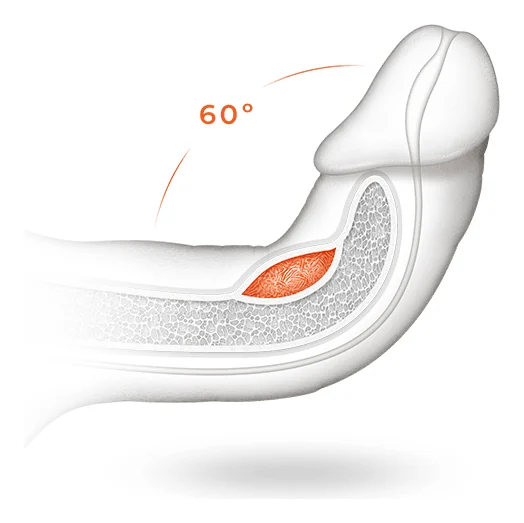
Peyronie's disease causes scar tissue (plaque) that can lead to curvature, pain and difficulty with intercourse. Curvature can also be congenital. After assessment, specialists may recommend plication, plaque incision with grafting, or, where erectile dysfunction is also present, correction combined with an implant.
Who it may suit
- Men with curvature that makes intercourse difficult or painful
- Men whose condition has been stable for several months (the stable phase)
- Men with congenital curvature
What to expect
- 1
Examination, and often a Doppler ultrasound, to measure the curvature and check erectile function
- 2
A surgical plan chosen to correct the curve while protecting sensation
- 3
Usually one night in hospital, then recovery at your hotel
- 4
Gradual return to normal activity, with intercourse typically after about 4–6 weeks
Your stay in Istanbul
The typical stay above is a guide. Your exact itinerary, including arrival day, tests, treatment, rest and a final check, is confirmed in your written plan once a specialist has reviewed your case.
Common questions
When is surgery recommended for Peyronie's disease?
Will surgery affect sensation or length?
Other treatments
Prostate (BPH) treatment
Modern minimally invasive treatment for an enlarged prostate, including laser and water vapour (Rezūm) options.
Learn moreHormone assessment & varicocele microsurgery
Testosterone and fertility work-up, premature ejaculation care and microsurgical varicocele repair.
Learn moreShockwave therapy (Li-ESWT)
Low-intensity sound waves that aim to improve blood flow for erectile dysfunction, with no surgery or downtime.
Learn moreStart with a confidential conversation
Share as much or as little as you like. A coordinator will reply on WhatsApp, have your reports reviewed by a specialist and send you a written plan, with no obligation.